
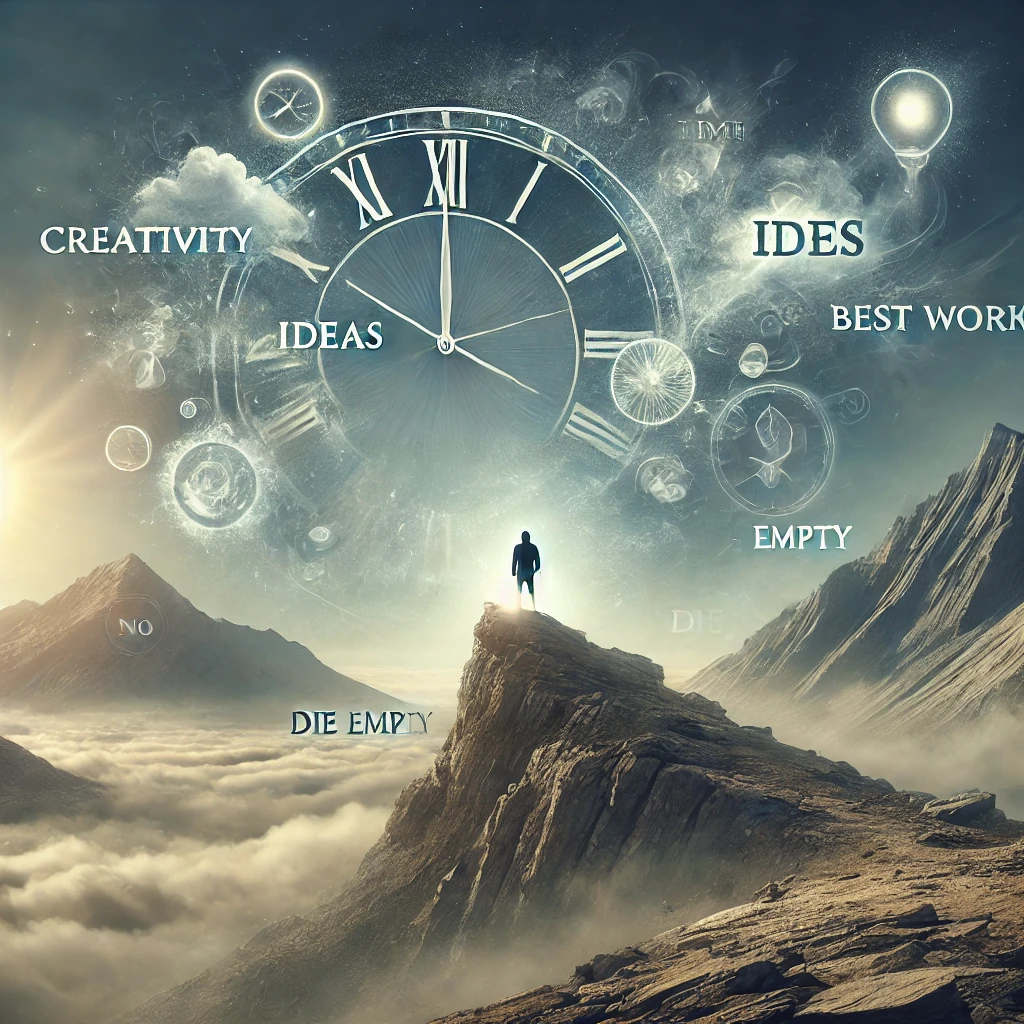
Most people go through life with untapped potential—dreams never pursued, talents never expressed, ideas never executed. Todd Henry’s book Die Empty delivers one powerful message: don’t take your best work to the grave. The central theme is simple but transformative—make every day count so nothing meaningful remains “left inside” when your life ends.
Henry argues that “dying empty” is not about hustling endlessly. Instead, it is about living intentionally, making decisions rooted in purpose, and refusing to delay the work that truly matters. This idea resonates deeply in today’s world, where distractions, fears, and routines often pull us away from meaningful goals.
⭐ What Does “Die Empty” Really Mean?
At its core, Die Empty focuses on one belief:
“The most valuable land in the world is the graveyard,”
because it holds unfulfilled dreams, unwritten books, unlaunched companies, and unexplored ideas.
To avoid adding to that graveyard of lost potential, Henry encourages readers to:
- Use their creativity while they have the chance
- Avoid dying with regrets
- Act on meaningful work instead of procrastinating
- Make daily decisions that align with their deeper purpose
It is a call to action—a reminder that time is limited, and life’s best work happens when we show up fully.
⭐ Why We Often Don’t Live to Our Full Potential
The book identifies several reasons why people leave their best work undone:
1. Fear of failure
Most people avoid taking risks because they worry about judgment or not being good enough.
2. Perfectionism
Waiting for the “perfect moment” or “perfect result” leads to eternal delay.
3. Comfort zone trap
Familiar routines feel safe, even if they hold you back.
4. Distraction and busyness
People stay “busy” but rarely do the work that truly matters to them.
5. Lack of clarity
Without knowing your purpose, life becomes reactive instead of intentional.
These obstacles keep people from creating meaningful work, launching ideas, or expressing their true talents.
⭐ Key Concepts From the Book That Support the Theme
1. Defining Your “Why”
Henry insists that you must identify what matters most.
Once purpose becomes clear, daily decisions become easier.
2. Aligning Actions With Intentions
A meaningful life is not built through rare big moments,
but through consistent daily behaviors that match your goals.
3. Managing Your Energy, Not Just Time
Working on what matters requires mental, emotional, and creative energy.
Henry suggests rationing energy for significant work instead of wasting it on low-value tasks.
4. Embracing Productive Tension
Challenges and discomfort often lead to growth.
If life feels too easy, you may not be pushing yourself toward your real potential.
5. Leaving a Legacy
Your work should make a difference—to yourself, your community, or your industry.
Legacy is not about fame; it’s about impact.
⭐ How to Apply the “Die Empty” Philosophy in Daily Life
1. Start with “Your Most Important Work” Daily
Ask yourself every morning:
“If today were my last day, what meaningful thing would I want to complete?”
Do that first.
2. Avoid the perfectionism trap
Action creates clarity.
Waiting for perfect conditions guarantees postponement.
3. Limit distractions deliberately
Turn off notifications, create a focused workspace, and schedule deep-work sessions.
4. Make room for creativity
Whether you are a writer, entrepreneur, corporate employee, or student—
creativity needs space, silence, and intention.
5. Track your progress
Review weekly:
- What meaningful work did you complete?
- What did you avoid?
- Where did you waste energy?
Intentional tracking prevents drifting.
6. Take small but consistent steps
Most meaningful achievements come from daily micro-actions, not huge leaps.
⭐ Why This Theme Matters More Today Than Ever
In a world filled with social media, shortcuts, and instant gratification,
people often chase:
- social approval
- unimportant tasks
- busy routines
- mindless consumption
But the theme of “die empty” forces us to pause and ask:
“What am I really doing with my life?”
It teaches that:
- time is finite
- ideas have an expiration date
- regret is expensive
- meaningful work must be done now
This mindset creates:
- more fulfilled individuals
- higher creativity
- stronger discipline
- deeper impact
⭐ Examples of People Who Practiced the “Die Empty” Philosophy
Example 1: Steve Jobs
He relentlessly pursued ideas, innovations, and creativity—never saving ideas for “later.”
Example 2: Maya Angelou
She produced poems, books, speeches, and creative work until her last year of life.
Example 3: Chadwick Boseman
Despite illness, he completed powerful films, leaving a legacy of strength and passion.
These people embodied the idea of using every ounce of talent during their lifetime.
⭐ Practical Worksheet
Readers love actionable content. Insert this section:
Daily 5-Minute “Die Empty” Checklist
- What meaningful task will I complete today?
- What is stopping me from starting?
- What small step can I take right now?
- What distractions must I eliminate today?
- What progress will I track by the end of the day?
This increases dwell-time and reduces “thin content.”
⭐ Conclusion
The central theme of Die Empty is not about fear of death—it is about fear of not living fully. It urges readers to stop waiting, start creating, and make choices that reflect their deeper purpose. By acting on your ideas today instead of postponing them, you ensure that nothing valuable is left undone.
Dying empty means living fully, contributing meaningfully, and using your gifts while you still can.