
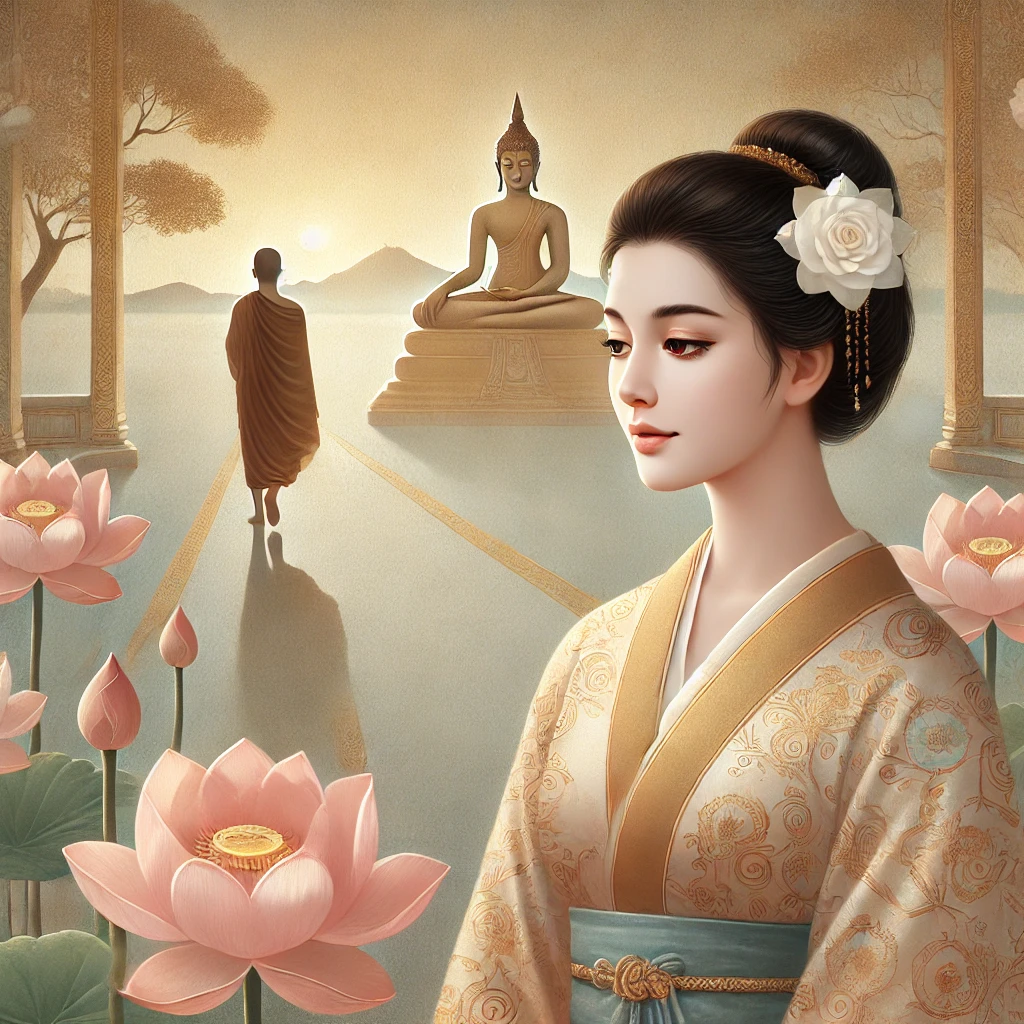
The Buddha’s Wife offers a rare, deeply human look into the life of Yasodhara, the woman who shared her world with Siddhartha Gautama before he became the Buddha. The book explores her emotional and spiritual journey—one rooted not in renunciation, but in relationships, community, and compassionate awakening.
This article breaks down the key characters, major themes, chapter-by-chapter summaries, and helpful Q&A, making it a complete guide for students, spiritual readers, and anyone seeking a better understanding of Buddhist literature.
Key Characters in The Buddha’s Wife
| Character | Role | Significance |
|---|---|---|
| Yasodhara | Wife of Siddhartha Gautama | Central figure whose suffering becomes the foundation of her spiritual awakening. |
| Siddhartha Gautama (The Buddha) | Spiritual leader | His departure triggers Yasodhara’s transformation and reveals the contrast between their spiritual paths. |
| Rahula | Son of Yasodhara and Siddhartha | Symbolizes the continuation of the Buddha’s lineage and Yasodhara’s role as a mother. |
| Pajapati | Buddha’s stepmother | A source of emotional and spiritual support who plays a vital role in the women’s sangha. |
| Channa | Siddhartha’s attendant | Represents the transition from palace life to Siddhartha’s renunciation. |
Major Themes in The Buddha’s Wife
| Theme | Description | Significance |
|---|---|---|
| Suffering and Transformation | Personal suffering becomes a catalyst for spiritual growth. | Yasodhara’s pain mirrors the Buddha’s journey but through connection rather than solitude. |
| Relational Awakening | Enlightenment through relationships and community. | Shows that spiritual growth doesn’t have to be solitary. |
| Feminine Spirituality | A relational, compassionate approach to spiritual progress. | Offers a balanced counter-narrative to traditional Buddhist stories. |
| Community & Compassion | Healing through communal support. | Formation of the women’s sangha highlights collective spirituality. |
For more background on Buddhist history, you may explore reputable sources such as:
- Harvard’s Buddhist Studies resources (edu)
- National Center for Complementary and Integrative Health on meditation (gov)
BOOK ONE: YASODHARA’S STORY — Chapter Summaries + Q&A
Chapter 1: Yasodhara’s Awakening
Summary:
Siddhartha leaves the palace the night after Rahula’s birth. Yasodhara awakens to heartbreak, confusion, and a sudden responsibility to raise their son alone. Her emotional turmoil becomes the beginning of her spiritual path.
Q&A:
Q: What triggers Yasodhara’s spiritual journey?
A: Siddhartha’s departure after Rahula’s birth.
Q: How does she respond initially?
A: She struggles with abandonment but focuses on caring for her child.
Chapter 2: The Path of Grief
Summary:
Yasodhara’s grief becomes a powerful inner teacher. Guided by the palace women, she learns that sharing suffering creates strength. Her spiritual awakening begins through community rather than solitude.
Q&A:
Q: How does Yasodhara find strength?
A: Through the support of the palace women.
Q: What does she learn from grief?
A: Staying connected helps heal emotional wounds.
Chapter 3: Meeting the Buddha Again
Summary:
After seven years, Siddhartha returns as the enlightened Buddha. Yasodhara faces conflicting emotions: pain, love, respect, and resentment. Their encounter explores the divide between personal life and spiritual mission.
Q&A:
Q: How does Yasodhara feel during their reunion?
A: Torn between grief and admiration.
Q: What challenges arise?
A: Accepting Siddhartha’s new identity as the Buddha.
Chapter 4: Life After Siddhartha’s Departure
Summary:
Yasodhara matures emotionally and spiritually while raising Rahula. Her role expands within the palace as she becomes a symbol of resilience and quiet wisdom.
Q&A:
Q: How does she handle single motherhood?
A: By devoting herself to Rahula and relying on community support.
Q: What role does she play in the palace?
A: A respected, stabilizing presence known for her strength.
Chapter 5: Siddhartha’s Return
Summary:
Siddhartha’s formal return brings old emotions back to the surface. Yasodhara confronts anger, longing, and renewed respect as she sees the Buddha’s evolution firsthand.
Q&A:
Q: What emotions arise during Siddhartha’s return?
A: Grief, anger, and admiration.
Q: How does she respond spiritually?
A: By understanding that both have transformed in different ways.
Chapter 6: Rahula’s Future
Summary:
Rahula grows older, and Yasodhara prepares him for a life shaped by both family legacy and personal choice. She must balance her desire to protect him with acceptance of spiritual destiny.
Q&A:
Q: What does Yasodhara want for Rahula?
A: Freedom to choose his path.
Q: How does she support him?
A: With love, guidance, and emotional openness.
Chapter 7: The Women’s Sangha
Summary:
Yasodhara joins Pajapati and other palace women to form the first community of Buddhist nuns. This marks a revolutionary step for women in spiritual life.
Q&A:
Q: Why does Yasodhara join the sangha?
A: To deepen her spiritual journey.
Q: What does the sangha represent?
A: A powerful movement toward gender equality in spiritual practice.
BOOK TWO: READER’S COMPANION — Chapter Summaries + Q&A
Chapter 1: The Gift of Desperation
Summary:
Desperation becomes a spiritual wake-up call. The chapter teaches how to transform intense emotions into awareness and inner growth.
Q&A:
Q: Why is desperation considered a gift?
A: It forces self-reflection and spiritual clarity.
Chapter 2: Creating the Circle of Compassion
Summary:
This chapter highlights the healing power of compassionate community.
Q&A:
Q: What practices build compassion?
A: Mindful listening, offering help, group meditation.
Chapter 3: Birthing and Nurturing the Now
Summary:
Teaches mindfulness and living in the present—lessons drawn from Yasodhara’s emotional resilience.
Q&A:
Q: What does it mean to nurture the now?
A: Staying anchored in the present moment.
Chapter 4: The Path of “Staying With”
Summary:
Commitment, loyalty, and staying present in relationships—especially during suffering—are explored.
Q&A:
Q: What is the value of “staying with”?
A: It strengthens emotional and spiritual resilience.
Chapter 5: Widening Circles, Ripples of Change
Summary:
Personal transformation leads to social transformation. Yasodhara’s influence expanded from the palace to the sangha.
Q&A:
Q: How does inner change affect society?
A: By inspiring compassionate action and inclusion.
Chapter 6: Going Forth Together
Summary:
The book ends with the message that the spiritual path is strongest when shared.
Q&A:
Q: What does going forth together mean?
A: Supporting one another’s awakening through community.